AI Is Just the Next Tool in the Technology Toolbox
From radio to television to the smartphone, every new technology arrives with the same mix of wonder and fear. AI is the next tool in that line — and how we use it is the whole question.
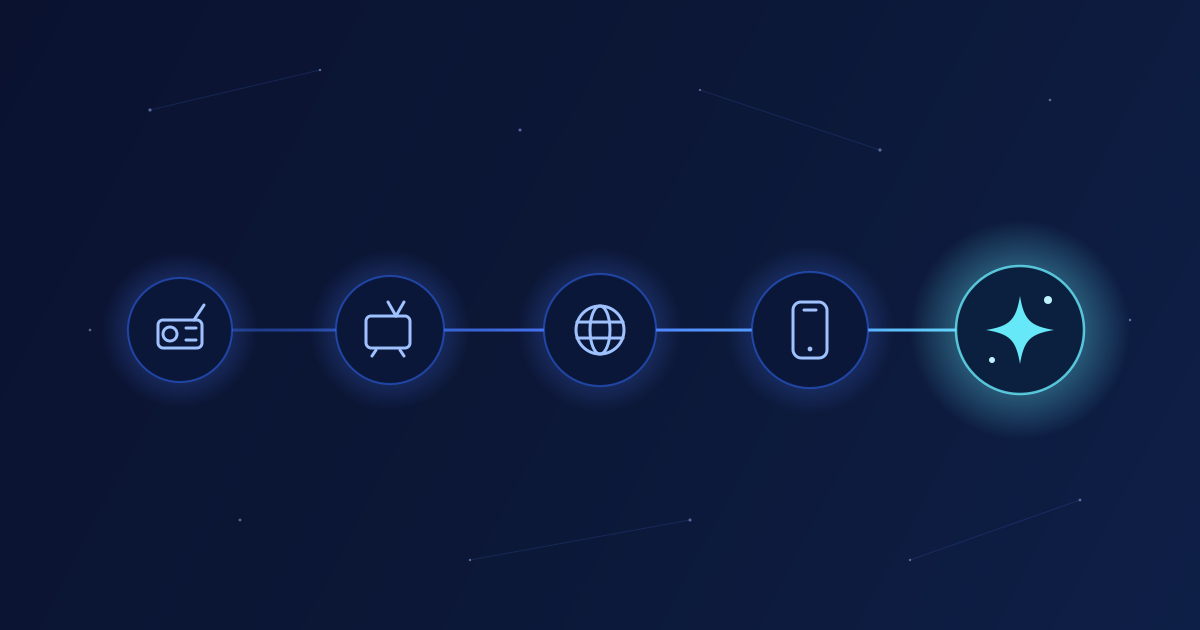
Every generation meets a new technology with a mix of wonder, doubt, fear, and eventually dependence. Before television, every American living room had a radio. Families gathered around it to hear all their updates: news, music, sports, dramas, and presidential addresses. Then came the black-and-white television and added pictures to the voices people already trusted. Radio didn't disappear, but its role changed. Television became the new focal point, and people asked a familiar question: what will this new technology do to the life we know and love?
Throughout history, this pattern has repeated again and again. Color television made black-and-white sets feel dated. The internet changed how people found information, communicated, shopped, learned, and worked. The iPhone put a computer, camera, map, phone, and assistant in a pocket. The iPad made computing feel portable and approachable. Each invention was first treated as disruptive, risky, or unnecessary. Over time, each became normal. In our view, today, artificial intelligence is going through that same cycle.
The Fear That Comes with Every New Screen
It may sound strange now, but television was not welcomed by everyone as harmless progress. In the 1940s and 1950s, many adults worried about what it would do to children, families, education, attention spans, imagination, and community life. Some critics argued that television encouraged laziness, weakened reading habits, isolated people inside their homes, and filled young minds with shallow entertainment.
From Television to the Internet to AI
Looking back, television did create problems. It changed advertising, politics, childhood routines, family habits, and public attention. But it also created shared national moments, expanded access to news, brought live events into ordinary homes, and became a powerful tool for education and storytelling. The technology itself was not good or evil. It became what people, companies, parents, educators, lawmakers, and communities allowed it to become.
In our view, AI belongs in that same timeline. It is not a mysterious force outside human history. It is the next stage in a long pattern of tools that extend what people can do. Radio extended the human voice. Television extended sight and sound. The internet extended access to information. Smartphones extended personal connection and productivity. AI extends drafting, analysis, brainstorming, translation, design, coding, and decision support. It does not replace human judgment; it makes judgment more important.
AI as a Power Tool
We compare AI to a power tool. A person can build a house with a hammer, a hand saw, and enough time. But if the goal is to frame a house efficiently, cut materials accurately, or complete a project at scale, power tools make sense. A circular saw does not make the carpenter irrelevant. A nail gun does not remove the need to measure twice. The tool increases speed and capability, but the builder remains responsible for the plan, the safety, and the final result.
AI works the same way. It can help draft an email, summarize a long document, organize research, generate ideas, test a concept, or explain a subject in plain language. Used well, it saves time and opens creative doors. Used carelessly, it can produce errors, bias, shallow thinking, or overconfidence. The real question is not whether AI is good or bad. The better question is how to use it safely, responsibly, and honestly.
Responsible use starts with remembering that AI is not a substitute for character, wisdom, or accountability. People should check important facts, protect private information, respect creative ownership, and be transparent when AI meaningfully contributes to a project. Students should still learn how to think. Workers should still understand their craft. Leaders should still make ethical decisions. AI can support those responsibilities, but it should not be used to escape them.
Progress Without Panic
The fears around AI are not meaningless. New tools can cause real disruption. Jobs may change. Schools may need new expectations. Businesses may need new policies. Families may need new conversations about attention, learning, and trust. But fear should not be the final word. If earlier generations had rejected television, the internet, smartphones, or tablets simply because they were disruptive, many useful forms of communication, education, medicine, business, and creativity would have developed more slowly.
The lesson from history is not that every new invention should be accepted without question. The lesson is that panic and progress often arrive together. Black-and-white television once felt like a strange new machine replacing the familiar comfort of radio. Now AI is doing the same. It deserves caution, but it also deserves imagination.
Wondering how to put AI to work responsibly in your business? Let's talk about it — we'll help you find the straightest, safest line.